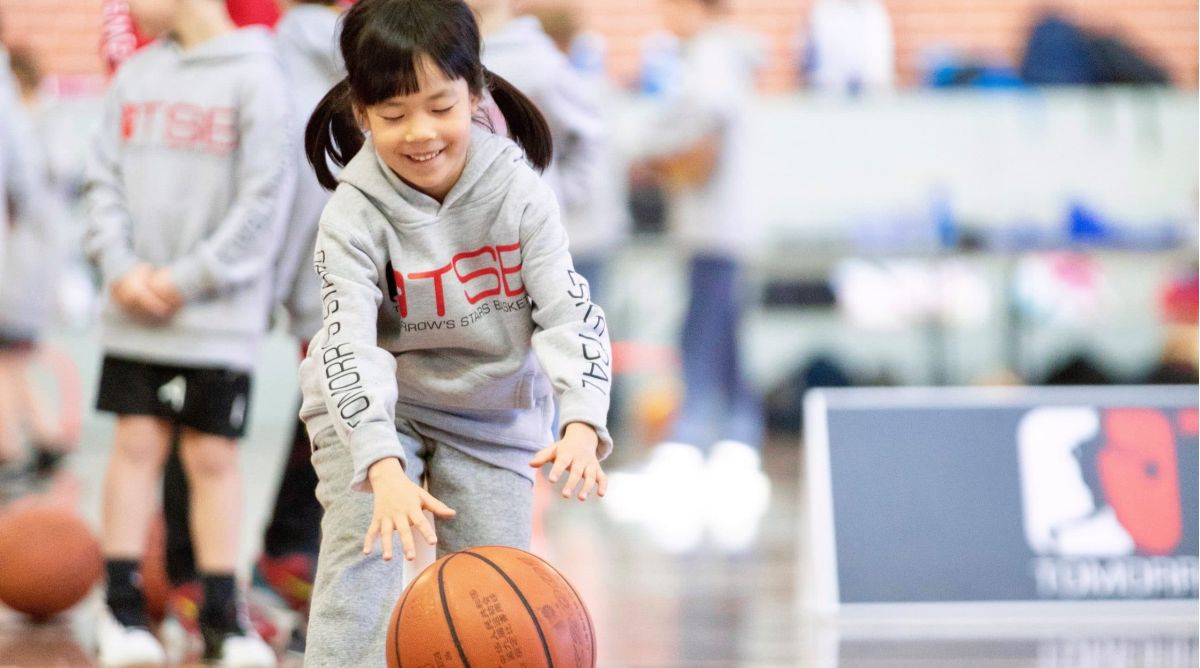
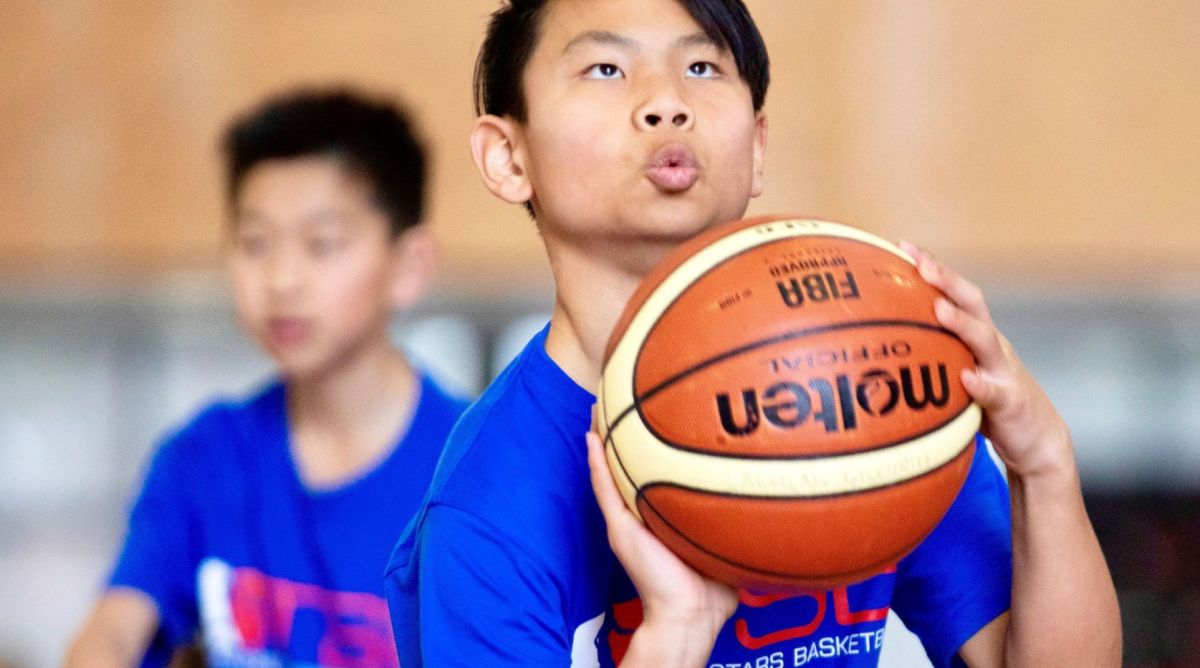
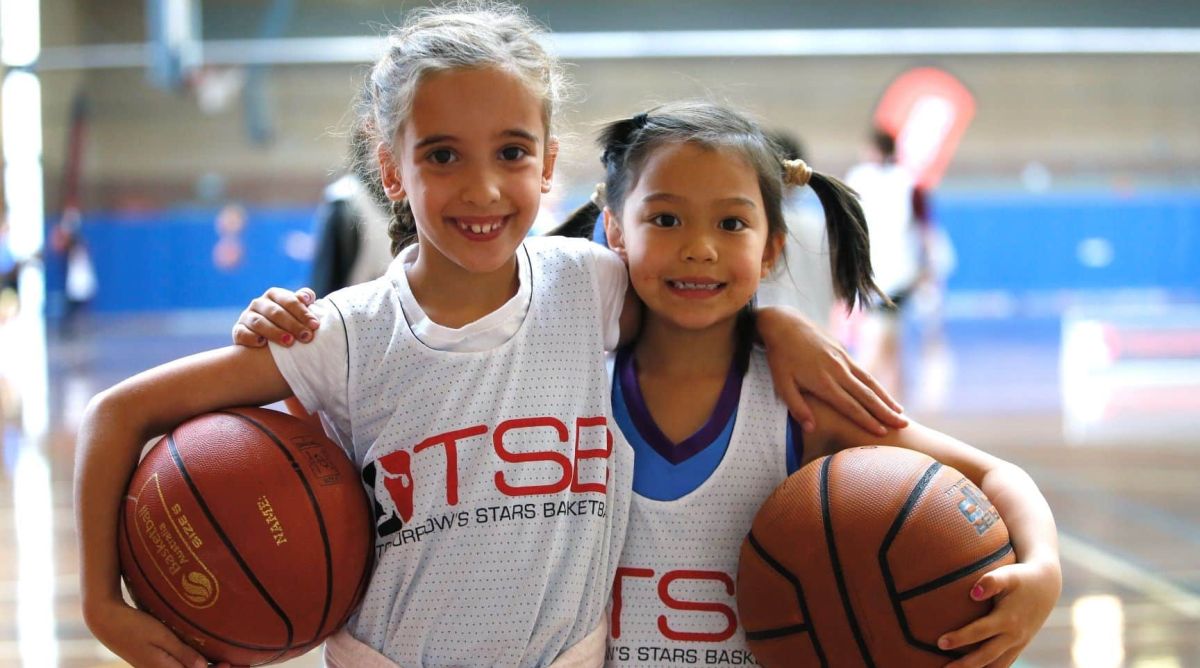
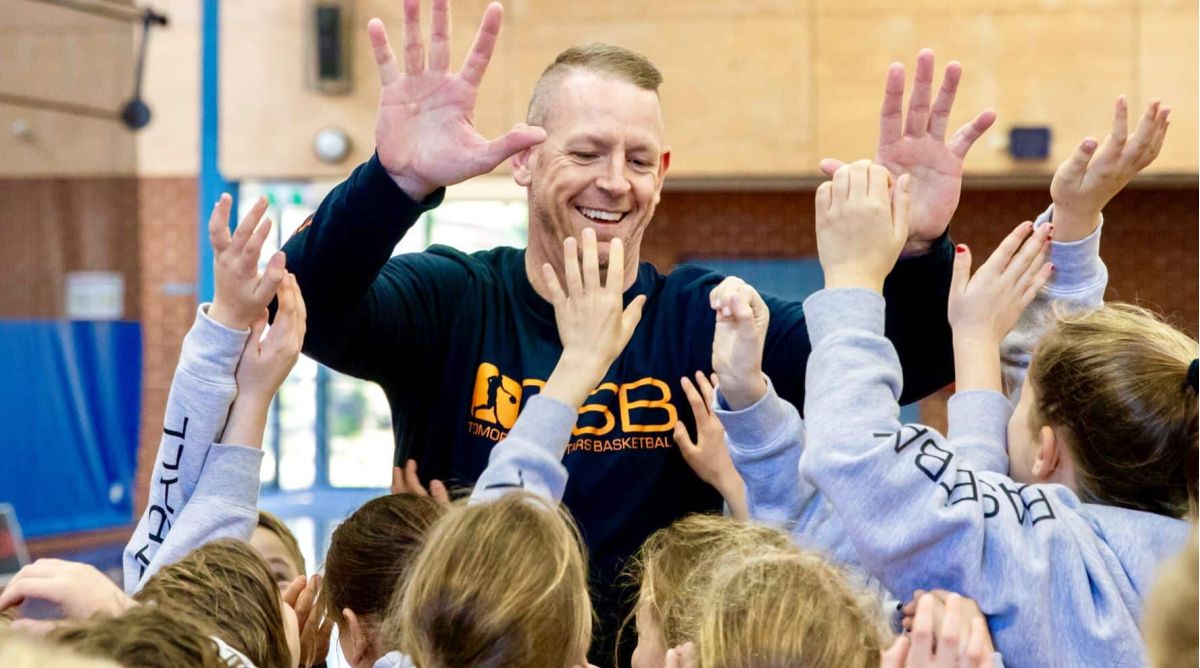
Dribbling Drills for Young Basketball Stars

Top Dribbling Drills for Young Basketball Stars

Helping your kids excel at dribbling requires exercises that are both achievable and skill-building. However, making these exercises fun and engaging is key to keeping them motivated and engaged with the game. These are not just any drills; they need to be designed to be fun so your kids not only upskill but also continue to enjoy the game.

Here are five fantastic basketball drills designed to improve the dribbling skills of young players, which we will often play at our basketball camps. They ensure your kids can gradually build their abilities and gain confidence on the court, setting a strong foundation for their basketball journey.

  1. Dribbling Tag: This exciting game keeps kids active and sharpens their dribbling skills. One or two participants in this game are “it” and don’t have a basketball. The rest of the players dribble their balls around the court. The “it” players must tag someone with a ball, making them the new “it.” This game not only enhances dribbling but also encourages quick thinking and agility.
  2. Dribbling Relays: These relays are a fun and competitive way to build dribbling skills and teamwork. We divide the kids into two or more teams and set up a relay course with cones or markers. Each player must dribble the ball through the course as fast as possible and then pass it to the next teammate. The team that finishes first wins. This drill helps your kids improve their control, speed, and coordination.
  3. Red Light Green Light: This is a classic game with a basketball twist. One player acts as the “traffic light,” standing at one end of the court, while the rest start at the opposite end with their basketballs. When the traffic light says “Green Light,” players dribble towards them. When they say “Red Light,” players must stop immediately. If a player is caught moving on “Red Light,” they must return to the starting line. This game teaches your kids to control the ball and stop quickly.
  4. Dribble Knockout: This a high-energy drill that focuses on ball control and defensive skills. Each player dribbles their ball within a designated area while trying to knock other players’ balls out of bounds. If a player’s ball is knocked out, they’re out of the game, and the last player remaining wins. Dribble Knockout helps your kids improve their dribbling under pressure and enhances their defensive techniques.
  5. Two-Ball Dribbling: Kicking it up a notch is this advanced exercise that challenges your kids to handle two basketballs simultaneously. We start with simple dribbling, keeping both balls bouncing at the same time, and as they become more comfortable, introduce variations such as alternating dribbles or dribbling one ball high and the other low. This drill develops ambidexterity, coordination, and control, preparing your kids for more complex dribbling maneuvers.

Dribbling Drills for Sharper Skills

Incorporating these fun and engaging drills into practice sessions can really boost young basketball players’ dribbling skills. Each drill offers unique benefits, from enhancing basic control and agility to improving advanced coordination and pressure handling. Regular practice not only helps your kids build a solid foundation but also keeps them excited about the game.

At Tomorrow’s Stars Basketball, we believe in nurturing talent with enjoyable and effective training methods. We help young athletes shine on the court and develop a lifelong love for basketball.
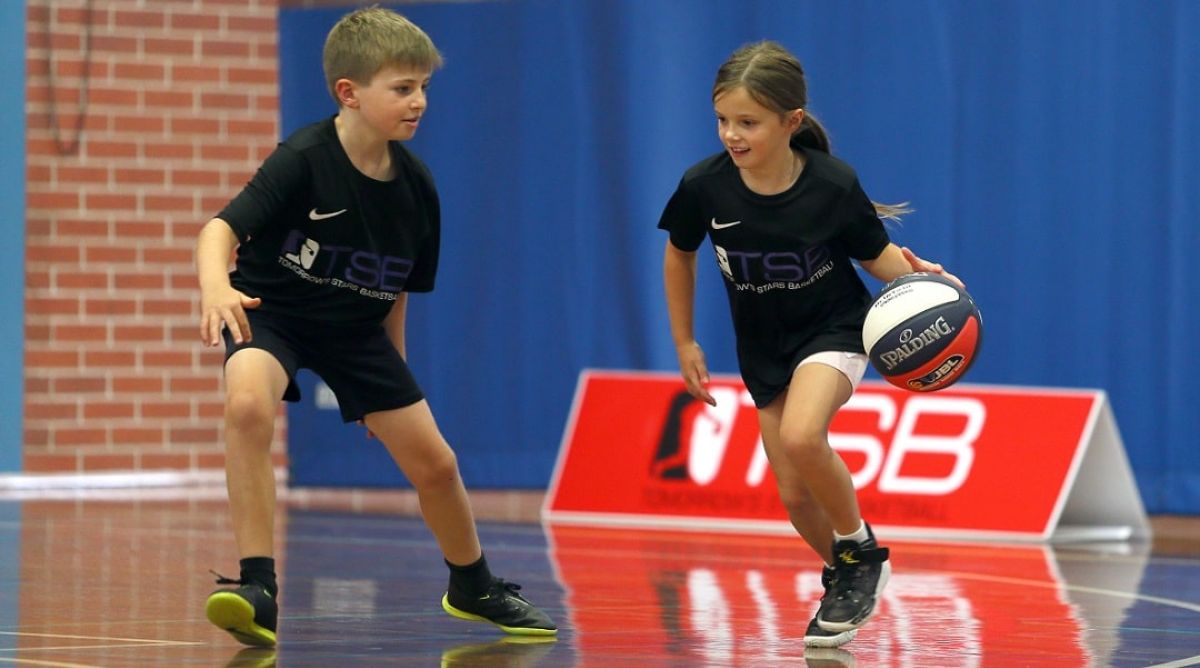
prevent basketball injuries

How to Prevent Basketball Injuries

Basketball is one of the most exciting games to play but because of its fast pace, it also means injuries can arise. While getting hurt playing regular sport is almost inevitable, there are things you can do to minimise the risk as well as treat injuries correctly so you can recover faster.

Always warm up effectively

If you love basketball, it can be easy to simply want to run onto the court and start playing when you arrive at the venue. But going through a proper warm up routine will help prevent injury by ensuring your body is ready for physical activity. Light jogging is recommended to get the body going, followed by a range of stretches. Practicing side to side movements and shooting drills in warmups will also help your body get ready for a game or training session. 

Wear clothes that fit

Baggy shorts or jersey can make it harder to move and also increases the risk of other players getting fingers caught up on them. Wearing a uniform that fits well is paramount. Sneakers or boots that fit are also crucial – not too loose, not too tight. Older footwear can also lose grip making you more susceptible to slipping. Wearing jewellery is also a no-no as earrings can get caught up in the action and wearing a ring increases your chances of a broken finger if the ball or a player hits it.

Protect your ankles

A rolled or sprained ankle is one of the most common injuries basketballers face. But it’s also one that can be significantly prevented easily. Whether you’re participating in a game or a training session, taping your ankles before playing or wearing ankle braces reduces the angle your ankle can move, making it a lot harder to roll or sprain. Choosing footwear that has good support will also help.

Other injury prevention tips

  • Wear a mouth guard
  • Play on a dry, clean safe surface
  • Always follow the rules

Injury Treatment

For ankle, knee sprains or other muscular injuries:

Use the R.I.C.E. method

Rest the injured area.

Ice the injured area for 20 minutes every 2 hours.

Apply a Compression bandage to reduce swelling.

Elevate the injured area to a level above the heart.

For concussions:

If you received a heavy knock, stop playing right away. You should not return to playing (games or trainings) until you are evaluated by a medical professional and are given the all clear.

For jammed fingers:

Run your finger (or hand) under very cold water for 20 minutes. Alternatively, apply an ice pack to the injured area (with a layer around it such as a cloth). You can continue playing by taping the injured finger to the next finger.

A lot of injury prevention is common sense. If you take all the main precautions, you should be able to enjoy basketball to its fullest!

bill russell basketball center

How to Excel as a Basketball Center

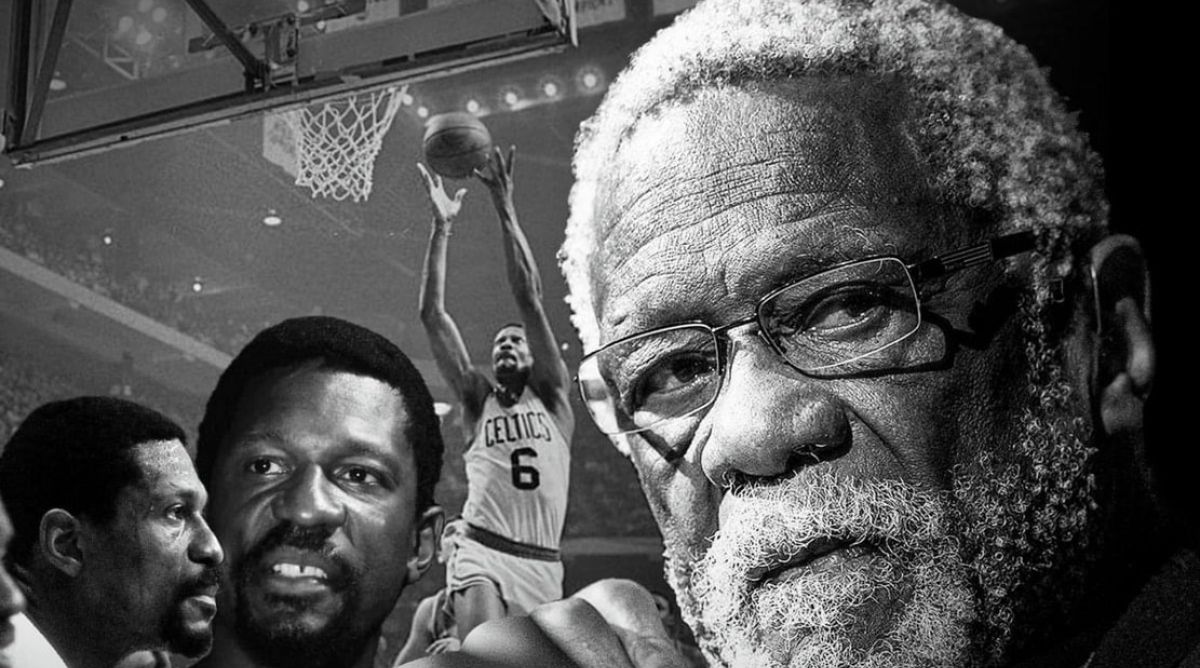
With the sad passing of the Boston Celtics legend Bill Russell, we thought we’d pay our respects by writing an article with tips on how to dominate the center position in basketball. Russell was not only one of the best players of all time, but an athletic big man who revolutionised the game. Focused on team success, he won an amazing 11 NBA championships and 5 league MVP awards.

While the NBA has developed into a “small ball” league over the last couple of decades, a dominant big man is still crucial in most other leagues across the world, especially at the amateur level. Here are 4 important roles a big man needs to perfect in order to succeed.   

Inside Scoring

Most tall players get thrown into the middle, but height alone will not always mean success. A center needs to have an array of post moves and the ability to finish at the rim. Practicing footwork is crucial to becoming a solid center. Hakeem Olajuwon was the master of post moves and could score on his opponents with a variety of fakes, drop steps and spins. Watch his videos on YouTube to get some great ideas on what to practice.

Passing from the Post

Scoring inside is important but having the ability to find the open man when you’re double teamed can take your game to a whole new level. When the defence collapses, knowing where the open teammate is and being able to execute the pass will have opposition teams hating when they play you. Australia-born Andrew Bogut is a name that comes to mind when excelling at this skill. He won a championship with the Golden State Warriors by passing from the post when scoring wasn’t an option. Patience and protecting the ball is key when waiting for the right moment to make the pass.

Rebounding at both Ends

A center who controls the boards can dominate a game without scoring. More rebounds mean less opportunities for the opposition and more chances for your own team to score. Positioning is key when it comes to being a strong rebounder. Getting between your player and the basket gives you a much better chance of coming up with the ball. Also, knowing where the ball is most likely going to end up after a miss is a skill that can be developed with experience. Dennis Rodman and Charles Barkley were both players who lacked size but had an uncanny ability to find the ball and outmanoeuvre their opponents. Watching footage of them and continually noting where various missed shots go will give you a big advantage, no matter what your height!

Guarding the Opposition’s Big

If you want to excel as a basketball center, you also need to be able to stop the opposition big man. Height, strength and physicality all play an important role in this. But even if you’re undersized, there are ways to keep your opponent under control (see Rodman and Barkley again). Not allowing your opponent to catch the ball close to the basket will reduce the chance of them scoring. Use your knee to subtly push them off the block, so they have to beat you with an outside game. Staying on your feet and not falling for fakes (but keeping your arm up at all times) also goes a long way to success. Being in top condition is another great asset. If you can sprint up and down the court and beat your opponent to the key, you will be able to set the tone, and hopefully wear them out in the process.

While having a 3 point shot is something most youngsters desire, if you’re a center and can perfect all of the above, you’re going to have a lot of success on the basketball court. To work on your post moves, consider private basketball training with Tomorrows Stars.

Basketball fundamentals that beginners should practice

If you are just starting out in basketball, the best way to improve and develop your skills to the highest level is to get the fundamentals right. Learning to execute the basics will give you a solid foundation to build from and make the rest of the game much easier.

The fundamentals are the little things that can make a big difference, depending on whether they are done right or wrong. For example, when it comes to shooting, the fundamentals include positioning, shooting form and follow through.

In this article, we look at fundamentals for the most important aspects of basketball – shooting, passing, dribbling and rebounding.

Shooting

When watching the world’s best shooters, you will quickly notice that they don’t all necessarily shoot the same way. But while there is no one exact technique that makes you a brilliant shooter, mastering the fundamentals is the common factor amongst all good shooters.

Ensuring your feet are positioned the same distance apart on every shot is crucial. They should be squared up, your body low, and knees bent. The ball should go straight into your shooting pocket, your eyes should focus on the back of the rim (from whatever angle you are on), you should keep a fluid motion when going into your shot and your legs should help generate the distance – don’t push with your arms.

The follow through is equally as important, snapping your wrist straight down as the ball leaves your hand, hold the follow through until the ball has reached the goal, and be sure to land on your toes and remain balanced.

Passing

Passing fundamentals can vary slightly depending on what type of pass you are making. For a chest pass, both hands should hold the ball on the sides with your elbows held tightly in next to your body. Take a step forward in the direction you want to pass the ball, and at the same time, extend your arms so that your fingers rotate, your palms face outwards and your thumbs are pointing down.

A bounce pass uses similar fundamentals but when extending your arms, they should be pointed downwards. It’s important the ball hits the ground approximately ¾ of the distance between you and your teammate. Basketball camps are a great way to practice passing in groups of similar standard players.

An overhead pass involves holding the ball directly behind your head with your elbows bent and just in front of your ears. Take a step forward towards your target, extend your elbows and move your arms forward, but only a short distance so they end just above your head.  Your shoulders should remain still and most of the work is done by the elbows.

Dribbling

Controlling the ball is one of the most important skills needed to be able to play the game of basketball. So, learning the fundamentals is crucial. Using the tips of your fingers to bounce the ball is key to ensuring maximum control. As a beginner, it is common to use the palm of your hand, but this does not give you the same control and does not allow you to change direction easily. Keep your knees bent and ensure your body is low.

Maintaining a low centre of gravity allows you to stay balanced, and ensures you aren’t bouncing the ball too high, reducing the chance of an opponent stealing it from you. Bouncing it below your waist helps protect the ball and keeping your eyes up while dribbling allows you to see the court better and identify opportunities that lie ahead.

Rebounding

Rebounding ensures your team gains possession of the ball after a shot, which is why the skill is so important. Anticipating where the shot will go is the first fundamental for rebounding, so watching the flight of the ball in the air is crucial. Keep your feet apart in a low stance and your hands above your shoulders – that way you’re already in rebounding mode and can get your arms quickly to the ball after it misses.

Boxing out is also key to successful rebounding. When a shot goes up, find the nearest opponent and between him and the basket. Being in the front position (with a low stance and your body pressed against your opponent) well help you gain more rebounds than the other team. Lastly, and most importantly, assume every shot is going to miss. Players who watch the ball and react are never successful rebounders. If a shot goes up and you’re already preparing for a miss and go at the boards with high intensity, your contribution to the team will be highly valuable!

While practice is key to any sporting success, ensuring you have the fundamentals is the best way to improve your game quickly. Private basketball training can help with this, as a professional coach will help you get these fundamentals right from the start.

9 Ways to Improve Your Shooting

Shooting is the most important skill in basketball. At the end of the day, the objective is to get the ball in the basket, and whichever team does that the most times during a game win. Hence, improving your shooting should be a priority, no matter what standard you are.
Here are 9 tips that will transform you into a better shooter for your team.

  1. Practice, practice, practice.

Even the best players in the world practice shooting all the time. Steph Curry (one of the greatest shooters the world has ever seen) still takes 1000 shots after each practice session. During the offseason, he takes it up a notch, shooting over 5000 shots a day!

  1. Always eye the target early.

This may seem like a no brainer, but plenty of people shoot the ball without actually looking at where they want it to go. Focus on the target (the rim) early so your brain knows where you should be aiming, and subconsciously calculate the distance to the basket. Once you’ve shot the ball, you should always keep your eyes on the target and not the flight of the ball.

  1. Get balanced in a comfortable position.

Being comfortable is crucial when it comes to good shooting. Having your feet shoulder width apart will ensure you are balanced before taking the shot. Your feet should also point in the general direction of the basket, but not necessarily directly at it. Find a position that is comfortably to you, but the key is to then get into that same position on every shot.

  1. Hold your follow-through and relax your wrist.

Holding your follow-through (until the ball hits the rim) helps maintain a good shooting technique also allows you to identify if your arm, elbow, or wrist need better positioning. Your elbow should extend in a straight line and your wrist should always be relaxed.

  1. Do not think about your shot on Gameday.

Thinking about your shooting technique during a match is one of the worst things you can do. It can distract you from the flow of the game and won’t help you improve. Put all the elements out of your head during the game – it’s okay to miss shots. Think about the fundamentals of your shot during practice or when you’re attending basketball camps. Over time, it will become second nature during the game anyway!

  1. Watch footage of pure shooters.

Learning from the best can help you become the best. Watching footage of the best shooters will ensure you develop a technique that helps you improve. Some of the best pure shooters are Ray Allen, Klay Thomson, Reggie Miller, Larry Bird, Kyle Korver and of course, Steph Curry. Spend some time watching their videos on YouTube and take note of everything they do. Then try to replicate it.

  1. Film your technique.

Taking things, a step further, you may even want to record your own shot (both in practice and in games). This can shed light on what you are doing right or wrong and allow you to make adjustments to help you improve your percentage.

  1. Purchase a return device.

A return device helps get the ball back to you quicker and can literally double the number of shots you take while practicing. So, if time is limited, a return device is a great idea. Similarly, having a partner to rebound for you will allow you to get more shots quicker and allows you to get into a better rhythm.

  1. Practice, practice, practice.

Yes, this tip is exactly the same as number 1. But the importance of practice cannot be overstated. To become better, you need to put the work in. Repetition is the key!

Good luck, and for one-on-one help developing your shot, take a look at our private basketball training sessions.

basketball rebounding

3 Strategies to become a better rebounder

Rebounding is one of the least glamorous but most important aspects of playing basketball. When a shot is missed by your team, acquiring the rebound ensures an additional possession which gives you another opportunity to score. When a shot is missed by your opponent, getting the rebound means you prevent them from getting second chance points, and regain possession for your own offence. In a close game, getting crucial rebounds can be the difference between winning and losing.

So how do you become an expert rebounder? Well, you might think that you need to improve your jumping skills, but that’s not necessarily so. Regardless of your jumping ability and height, you need to be prepared for the ball to miss and get ready to catch the rebound. This involves out-positioning opponents who are also trying to get the ball off a missed shot.

It may sound easy, but you need to work very hard to become a good rebounder. This involves becoming very fit, increasing your spatial awareness, and perfecting the right techniques.

1. Keeping yourself in top physical condition

If you’re not fit, you won’t be able to play a good game of basketball. With all the running, jumping and physical contact required in the game, you need to get fit and then get fitter. The better your physical fitness, the greater your chances of being in the right position at the right time to grab a rebound.

If you’re not fit, then you will likely run out of steam and miss the rebounds by simply not being in the right place in time. That’s often why the bigger size players start off well at the beginning of the game and then wane as the match continues, simply because they run out of steam.

Working on your physical fitness means that you can outlast everyone else and get more rebounds to help your team! Our Private Basketball Coaching sessions not only help players work on their fundamentals, but also have a strong focus on fitness.

2. Work on your knowledge and awareness

Knowing all your teammates and how they operate on the court will help you to anticipate what’s going to happen at the glass. This knowledge can make you almost psychic, because you know when and where people are going to shoot, and where to position yourself for a rebound. Former NBA star Dennis Rodman wasn’t overly tall, but his positioning and hustle made him one of the best rebounders in the history of the game.

Then there’s knowing what the ball is going to do if it misses. With a little forethought you can work out that the majority of shots that miss from the corner rebound back to the same or opposite corner. On the other hand, shots missed from the wings are more likely to rebound to the same or opposite wing. An example might be that you have certain players on your team who statistically, when they miss usually tends to overshoot rather than under. If you already know this information you can position yourself to get the rebounds for your team.

3. Work on your rebounding technique

One of the best techniques to learn if you want to improve your rebounding techniques is the SWIM manoeuvre which gets you out of a box manoeuvre set up by your opponent. This involves getting your opponent’s arm out of the way so you can catch the ball. So as your opponent moves to block you moving forward, place your arm on their shoulder (face to face). Move your opposite leg in front and across their body (so you are slightly side on to them) and then use the arm on the same side of your body to swim over their head and move yourself forward and past their position, running forward to get the rebound and gain some easy points for your team!

We run a range of drills to help children of all sizes become better rebounders. To enrol your kids in basketball for the school holidays, call us on 1300 872 255 or shoot us an email today.

How to increase the vertical jump for basketball

Encouraging your kids to play sports is a great way to help keep them fit, healthy and make new friends at the same time. Basketball is a sport that most kids love to play, and it also teaches them about discipline, hard work and passion, all characteristics that can help them to succeed in life.

If your kids want to improve their basketball skills, one of the most important of these abilities is their vertical jump. In fact, it’s a fairly essential skill for all basketball players as it helps with shooting, rebounding and blocking on defence.

What is a vertical jump in basketball?

This is an explosive physical movement that literally propels a player upwards into the air. It’s an important move because it’s used so often in basketball. For example, a player needs to vertically jump to be able shoot, intercept a ball and recover it after a shot. A vertical jump is not dependent on a person’s height, so it’s a great thing for kids to practise that can give them the edge on game day. It can also be a bit of fun, and when you get older, maximises the chance of you being able to slam dunk!

If your kids dream of soaring through the air like Michael Jordan, let’s take a look at some of the exercises your kids can use to improve their vertical jumps very quickly.

Split Squat Jumps

Also known as Bulgarian Split Squat Jumps, this exercise helps players to accelerate their vertical lift and land on one leg. You start by standing with your feet wide apart, bending both knees until your thighs are parallel with the floor and then jumping upwards as high as possible. Land into a lunge position with one foot in front of the other and your thighs parallel with the ground once more. Then jump up again from this position and swap legs with each landing.

Standing long jump

Also known as the broad jump, this exercise helps players to increase their lower body strength. For this exercise, you need to start in a standing position, slightly bending your knees and then leaping forward with both feet as far as possible. The key is to land in a standing position so you can keep repeating the exercise.

Tuck jumps

This exercise helps train players to land correctly without injuring themselves during a game. From a standing position, bend your knees, jump upwards vertically and at the top of your jump bend your knees upwards towards your chest. Drop your knees back down, land in a standing position, bend your knees, jump up again and repeat.

Lateral Jumps

Basketball players are constantly moving from side to side, but also changing direction, cutting and pivoting at the same time. Practising lateral jumps will help increase the power of these moves. From a standing position, hop to the right whilst bending slightly and landing with your right leg forward with left at the back. From this position, hop towards the left with the left foot forward and the right behind, bending at the waist. Keep hopping from right to left to build up your lateral jump strength and speed.

If you want to improve your vertical jump, why not enrol in our Basketball Jump Program and maximise your leaping ability.

At TSB, we teach basketballers to visualise the moves, perform them on a regular basis and achieve the outcomes they want. Call us on 1300 872 255 or shoot us an email today.

7 Great basketball games for kids to practice

Basketball is one of the most popular sports in the world and comes with a range benefits. These include increased socialisation, improving cardiovascular health, boosting the immune system, burning calories and better coordination. All of these are important to the development of children.

To get the most out of your basketball, you need to train hard. But it doesn’t always have to be hard work. Here are seven basketball games that you will all absolutely love.

Horse

The first player has to invent a shot, explain it to the other players and then take the shot. Examples of shots can be hopping on one leg, shooting from a tough angle or throwing the ball between their legs. If they make the shot, then the next player tries to replicate it. Each time a player misses their shot they are given a letter, starting with H for HORSE and the ball moves to the next player and so on. When a player’s letters spell the entire word HORSE, they are eliminated. The last player standing wins the challenge.

Knockout

With two basketballs, players line up behind the free throw line. The first player takes a shot and immediately after, the second player can also. If the first player misses, they have to rebound their own ball and make the shot (from anywhere). The second player does the same, and if they make their shot before the person in front of them, the first player is eliminated. If the first player makes the basket first, they pass the ball to the next person in line, and they shoot a free throw, and then follow up a miss from anywhere. Whenever the player behind hits their shot before the other person, they knock them out. The game keeps going until one player is left the winner.

Around the world

This game involves making shots one after another from multiple spots in an arc around the court. Each player shoots from the first spot, and if they make it, they move to the next spot and get another turn. If they make that, they continue to the next spot and so on. Once they miss, the next player shoots. And they continue moving from spot to spot until they miss. The first player to go all the way round wins the game.

Musical baskets

Similar to musical chairs, you require the same amount of basketballs as there are players. All the balls are placed in a circle and the players walk around the circle until the music stops. The players all grab a basketball and have to make a shot, sitting down when they make it. The last person standing is eliminated and the game starts again with one less ball and player.

Dribble limbo

For this game, each player has to limbo under a pole while dribbling a basketball. After every player has either succeeded or failed once, the pole is lowered and the players who succeeded in the first round get to limbo and dribble again. This continues until only one player is left as the winner.

Basketball relay

Two teams line up along the baseline and the first player in each team dribbles a basketball to the opposite baseline or half court and then back again. Once the second player receives the ball, they do the sme thing. Each player repeats the process and the first team to have all their players complete the relay wins.

Twenty-one

This is a freestyle game where the first player to score 21 points wins. If they go over 21 points, however, their score is reduced to 11. Following each winning shot, that player has three free shots in a row, but if they think they might go over 21, they can refuse these free shots. This is a game of defence and offence and you can even make up your own rules!

These games are a great way to stay active and improve your basketball skills. In conjunction with private basketball coaching, this will help you develop your game. For more information, call Tomorrow’s Stars Basketball on 1300 872 255.

Everything You Need to Know About Kids’ Basketball Coaching Classes

Are you considering enrolling your child in private basketball coaching classes but aren’t sure what it involves? This post is for you! Private basketball training for kids can provide beneficial support and guidance for a player, helping them to develop skills that they can use on and off the basketball court. 

When is my child ready for basketball training class?

If your child is passionate about basketball and wants to take their game play to the next level, private one-on-one training could be exactly what they need. Private classes allow players to develop their skills at their own pace through customised training that has been designed specifically for them. 

Private parent/player lessons are a great way to support your child and spend quality time together learning new skills. In these classes, parents can train alongside their child and play a significant role in their improvement.

The great thing about private basketball training is that anyone can do it, no matter the age of the player or their skill level.

What value can a basketball training class add to my kid’s training?

Personal coaching sessions can help refine a player’s skills, boost their confidence and set them up to achieve their goals on and off the court. Whether your child is passionate about pursuing basketball professionally, or just loves the game, private basketball training is an excellent way to help them take the next step. 

While coaching helps advance a player’s skills in basketball, it is also beneficial for a number of mental and emotional factors too. Here are some of the major advantages of attending basketball training for kids:

One on one attention

When your child attends a one on one training session, they will receive the undivided attention of the trainer. This means the specialised trainer will be able to swiftly identify areas of weakness and apply strategies to help strengthen them. In a one on one session, a player can move at their own pace, and focus on the specific skills that they need to be stronger.

Tailored, personal approach

Flowing on from above, a one-on-one training session means more attention on a player and their specific needs. The trainer can design and implement custom training targeted specifically for your child. How is this beneficial? Players can advance much faster when the training is designed specifically for them.

Increased confidence

Confidence is crucial for a basketball player to compete at a high level. With private training, players can improve their skills, strengthen weak areas and boost their confidence in their own abilities. This is not only beneficial for their game, but is an important quality off the court, too.

Skills & habits for success

To go far in basketball requires so much more than perfecting shooting and dribbling. A good work ethic, perseverance and positive self talk are all key skills that a player needs to learn. Guided by an expert trainer in private lessons, players can develop the positive habits that are required for success.

Professional insight

It is very hard to be successful in any field without the support and guidance of someone who has been on the same journey before. In private basketball training, your child will receive first hand wisdom and advice from someone who has many years of experience and plenty of tips and tricks to pass along. 

If you are looking for basketball training for kids in Melbourne, check out the first-rate programs we offer at Tomorrow’s Stars Basketball. 

5 Things That Make an Excellent Private Basketball Training Program

It’s always a good idea to get your children into sports while they’re young. Playing sports imbues young people with positive core values, helps them develop social skills, and boosts their self-confidence. It keeps them active, which helps promote good bone and muscle growth, improves coordination and balance, and reduces their risk of developing childhood obesity. 

Basketball is one of the most well-known and beloved team sports played all over the world and is an excellent introduction to the world of athletics for any young person. The history of basketball in Australia dates all the way back to 1897, when the game was brought to our shores just six short years after its invention in a Massachusetts college. Though it took a number of decades to gain traction, it became a popular pastime due to its easy-to-follow rules and the fact that it could be played indoors or outdoors, rain or shine. 

If you are a parent looking to enrol your child into a sports training program as an after-school activity or to help them have something to do during term break, basketball camps are a fantastic choice. Sports camps typically focus on teaching young people the fundamentals first before delving into sports-specific technical skills, allowing your child to develop as an athlete. 

If you’d like to specifically advance their potential as a basketball player, one-on-one private basketball training with a coach allows for a more personalised learning experience. Below are some of the hallmarks of a good private basketball training program:

It’s run by someone who knows the sport

When you seek relevant knowledge on any subject, you would typically consult an expert in that field. In the same vein, a subject can only be effectively taught by someone who has a comprehensive understanding of it. One such expert is Brett Rainbow, founder of Tomorrow’s Stars Basketball.

Brett was a former professional player for the Melbourne Tigers and long-time coach for the basketball teams at Xavier College, Wesley College, Trinity Grammar, Christ Church Primary, and many more. He signed his first contract at the age of 16 and went on to have a long and illustrious career in the sport, which includes playing in the National Basketball League (NBL) and taking the championship title with his team in 1993 and 1997. He is a three-time Australian All-Star Slam Dunk Champion and is also the first Australian to have been selected to play in China as a professional in the Chinese Basketball Association. If you want your child to learn how to play basketball, you’ll find no one better than Brett and his handpicked team of experts at Tomorrow’s Stars Basketball.  

It instils and fosters positive values

Teaching the necessary sport-specific skills that can help your child get ahead is vital, of course. However, an excellent private training program motivates a young person into becoming the best person they can be, in and out of the court. 

The best programs are the ones that build up your child’s self-confidence, with a coach that truly believes and cares deeply about them. Even if they are being privately taught and trained, you want a program that will teach them about the importance of teamwork and cooperation. After all, basketball is still a team sport at the end of the day. A program that focuses on respect for fellow players and being a good sport will also help your child become courteous and well-adjusted. 

If you can, take the time out to observe how lessons are conducted. Are they conveyed in a positive manner, or is your child being berated for every little mistake? Is the coach light-hearted or heavy-handed? Is your child being given enough opportunities to think critically and solve problems? Studies have shown that children learn better and are motivated to work harder in an environment that favours positive over negative enforcement. Keep this in mind when you’re scouting for a suitable camp. 

It teaches discipline

In this context, we mean discipline not only in that a good private training course makes sure that your child understands how to play by the rules. We also mean that during these one-on-one sessions, he or she will learn, understand, and follow the code of conduct that is expected of all athletes regardless of the sport they play. 

We also mean “discipline” in that by going to these sessions, your child will learn how to follow routines. Most competitive sports are unpredictable by nature. Having structure and following routines not only gives your children a sense of comfort, order and stability, it also prepares them for any number of situations that may be challenging to foresee during a game. It hones the skills they have previously learned and helps them train their minds and bodies to identify common actions and how to react to those actions accordingly and consistently. 

It’s innovative and constantly being improved on

The very best training courses are the ones led by people who don’t rest on their laurels. The founder of Tomorrow’s Stars Basketball has won multiple basketball championships and is already considered one of the best in his field. He maintains that position by investing in relevant continuing education in order to constantly improve the quality of knowledge imparted to students enrolled to TSB’s programs, as well as the way those lessons are taught. 

Following his lead, the other experts at TSB are similarly committed to the same vision. Combining a strong foundation of fundamentals with the latest teaching and sports innovations is how TSB stays at the top of its game, teaching your child how to play basketball better. 

It’s detail-oriented

With private training sessions, the program is always tailor-made to suit your child’s age, abilities, and skill set. There’s no one else in the class, and this means that the coach’s attention is focused solely on helping them improve their game. Flaws can be spotted much more efficiently and duly corrected. 

Your child will receive lessons based on an adaptable, personalised curriculum tailored according to the way they learn, as well as the speed at which they can pick up concepts. Specific skills can be honed more intensively depending on their chosen position on the basketball team. 

The coach, on the other hand, can also provide meaningful feedback if he thinks that your child’s skills are suited to a different position. This custom approach is what sets excellent courses apart from the rest. 

Thousands of would-be stars all across the city of Melbourne have attended Tomorrow’s Stars Basketball private training classes to better their game, and the results have been phenomenal. Learn more about it here and sign your child up for a course today!

  • 1
  • 2
0